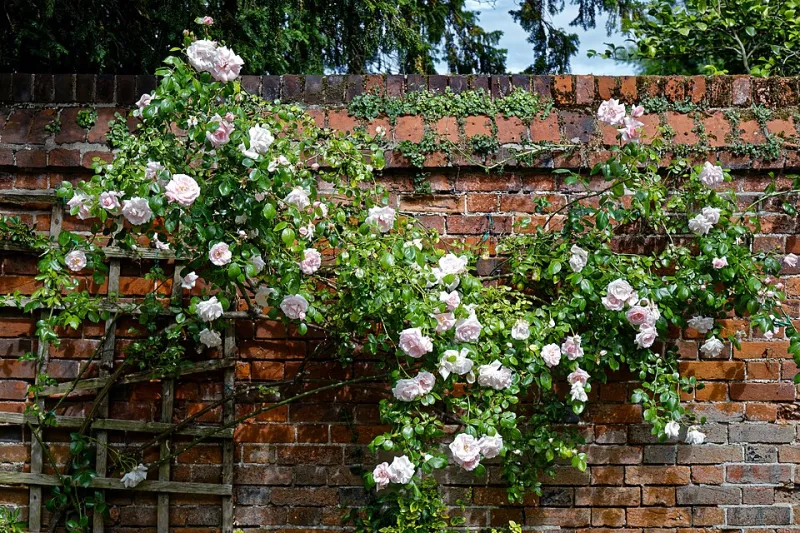
Silver Leaves and Stout Stems: A Coastal Border for Wirral's Windy Gardens
Photo: Tyne & Wear Archives & Museums, No restrictions, via Wikimedia Commons
Every coastal garden has a moment when the wind writes the planting plan for you. On the Wirral it usually happens in February, after a week of south-westerlies has browned the tips of something you were rather fond of. The good news is that a salt-tolerant border is not a compromise. It is a different, sharper kind of planting: silver foliage, tough stems, grasses that move rather than snap.
Read the site before you buy a plant
Exposure is not the same everywhere on the peninsula. A front garden in New Brighton can take the full force of the Irish Sea, while a walled yard in Heswall may only get the tail end of it. Spend a fortnight watching where the wind hits, where the leaves look burnt and where the soil dries out fastest. Sandy, free-draining ground around Hoylake and West Kirby will punish lavender planted in heavy compost, while the clay in parts of Birkenhead and Wallasey needs grit and organic matter before anything Mediterranean will settle.
Also look at what is already growing well nearby. Escallonia hedges, tamarisk and sea buckthorn are useful clues. If the neighbour's pittosporum is glossy and unbothered, you have a microclimate worth using.
Shelter first, but not a wall
A solid fence or wall looks tidy, but it creates turbulence on the leeward side. A permeable shelter belt is better: something that filters the wind rather than stopping it dead. A mixed hedge of Griselinia littoralis, Escallonia and Olearia x haastii will do the job in most Wirral gardens, and native hawthorn or blackthorn can be woven in for wildlife. Plant at 45–60cm spacing and give it a metre of space if you can. In a small plot, a slatted fence with climbers or a line of tall grasses at the boundary is a reasonable stand-in.
For the first two years, protect the shelter belt with windbreak netting. After that, the plants behind it will have rooted deeply enough to cope. Resist the urge to feed heavily. Rich soil makes soft growth, and soft growth is exactly what salt wind shreds.
The planting: three layers, twelve plants
A coastal border works best when it is built in layers: evergreen structure at the back, silver and aromatic plants in the middle, and tough grasses and edging plants at the front. The repetition of a few species is what makes it look deliberate rather than scattered.
Evergreen structure
- Griselinia littoralis — bright apple-green leaves and a dense habit. It is fast, salt-tolerant and happy in Wirral's mild maritime climate, provided the soil drains.
- Elaeagnus x ebbingei — silver-backed foliage and a tough constitution. It makes an excellent windbreak and can be clipped hard if it outgrows its space.
- Pittosporum tenuifolium — dark stems and glossy leaves. Use the compact form 'Tom Thumb' in smaller borders, or the species as a loose evergreen backdrop.
- Euonymus japonicus — glossy, upright and almost impossible to kill. It is not the most exciting plant on its own, but it holds the border together in winter.
Silver and scent
- Lavandula angustifolia — the classic coastal plant, but it needs full sun and sharp drainage. Add grit to the planting hole and keep it away from damp shade.
- Salvia 'Blue Spire' — silvery stems, late-summer blue flowers and a relaxed, see-through habit that lets the wind pass through.
- Santolina chamaecyparissus — bright silver foliage that looks almost white in low winter light. Clip it after flowering to stop it going woody.
- Eryngium planum — sea holly, with stiff blue stems and cone-shaped flowers. It looks better for a bit of salt and poor soil.
Grasses and edging
- Nassella tenuissima — fine, hair-like strands that move in the slightest breeze. It is short-lived but self-seeds gently in gravel.
- Festuca glauca — a compact blue fescue for the front of the border. It needs replacing every few years, but it earns its place.
- Anemanthele lessoniana — pheasant's tail grass, with coppery tones in autumn and winter. It is tougher than it looks and tolerates wind well.
- Armeria maritima — sea thrift, with pink pom-poms in spring and a tight, grassy habit. Use it as edging where the path meets the bed.
Planting and aftercare that suits the coast
Autumn is the best time to plant, while the soil is still warm and the rain is doing the watering. Improve the planting hole with compost and a handful of grit, then mulch with gravel rather than bark. Gravel keeps the collar of silver plants dry and reflects light up into the foliage.
Water new plants through their first summer, even the tough ones. After that, leave them alone. Cut grasses back in late February or early March, tidy santolina and lavender after flowering, and resist pruning evergreens in autumn. A light trim in mid-spring is enough.
What it looks like in November
The border does not go quiet. The evergreens hold their shape, the grasses turn copper and straw, and the seedheads of eryngium stand through the rain. On a grey Wirral afternoon, silver foliage picks up what little light there is and makes the whole garden look brighter than it has any right to.
That is the real argument for planting with the wind rather than against it. A coastal border is not a battle. It is a selection process, and the plants that pass the test are the ones worth having.