The Long Look: Designing a Small Wirral Garden Around a View You Don't Own
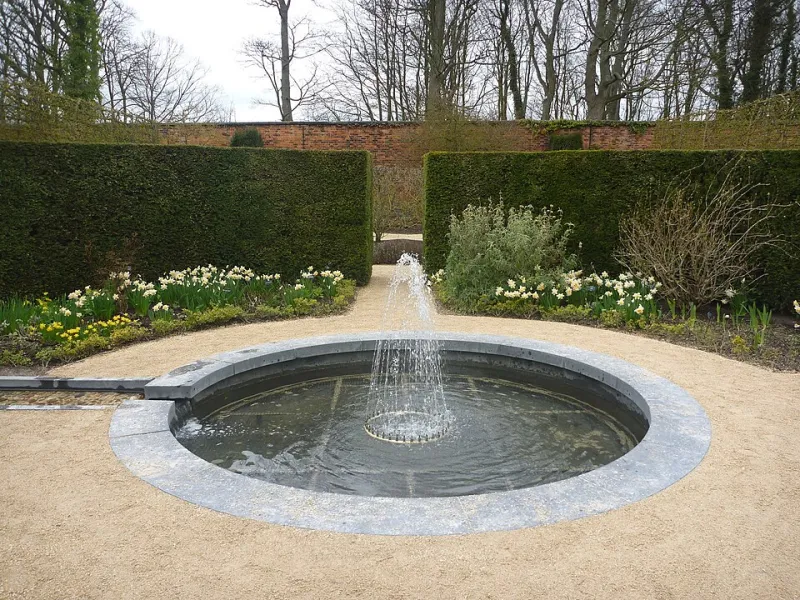
Photo: Richard West , CC BY-SA 2.0, via Wikimedia Commons
Most small gardens in Wirral are measured in metres, and the conversation usually begins with what will fit. A table, four chairs, a shed at the end. But stand at the back door of a terraced house off Price Street, or on the patio of a 1930s semi in Heswall, and the eye does something the tape measure can't: it keeps going. Over the alley, past the gap beside the shed, up into the crown of a sycamore two gardens away, and out — on the right afternoon — to the flat grey shine of the Dee.
That continuation is the most underused material in small-garden design. Landscape architects call it borrowed landscape, which sounds grander than it is. In practice it means accepting that your garden's best feature may be something you neither own nor planted, and then arranging your own plot so the eye is invited to go and look at it.
Nothing you plant will beat what's already there
There's a temptation, when you move into a small plot, to treat the boundary as a blank canvas and fill it. Six feet of new fencing, a run of fast-growing hedging, a pergola to add interest. All of that is fine in isolation. Together, it's how people accidentally wall themselves into a courtyard they didn't want.
A mature lime or a Scots pine on the far side of a boundary has taken forty years to reach the size it is. You cannot buy that. You can only lose it — by building something taller, by planting a hedge that closes over the gap, by putting the shed exactly where the sightline happens to fall. Before you order anything, walk the plot and note where the good long views actually are. Usually there are two or three, and usually one of them is about to be blocked by whatever you were planning for the far corner.
Framing is a decision about edges
A view without a frame is just background. The eye reads distance when something in the foreground tells it where to stop and where to look through. That's why a gap in a hedge is more powerful than no hedge at all, and why a single upright — a birch stem, a narrow trellis panel, the edge of a pergola post — can turn a vague green blur into a picture.
Think in apertures rather than boundaries. A window cut into a hornbeam screen. A gate you leave open. A section of fence that drops to waist height for two metres and then returns to full height. The frame does the work; the borrowed tree does the rest.
The bill for borrowing arrives in shade, roots and wind
Borrowed views almost always come with a mature tree somewhere in the arrangement, and mature trees come with consequences. The first is shade — often dry shade, because the canopy above is intercepting the rain as well as the light. The second is root competition, which is the reason nothing you plant at the base of an old beech ever seems to get going. The third is wind, if the tree is on the windward side, because a mature crown slows air and drops it on you in gusts that don't match the weather anywhere else in the garden.
None of that is a reason to abandon the view. It is a reason to plant differently. Forget the big hole and the bag of compost; near established roots, plant small, plant dense, and water patiently for two summers. Epimedium, Geranium macrorrhizum, euphorbia, cyclamen for autumn, ferns for the really gloomy corners. Sarcococca if you want scent in January and can accept a plant that sulks for a year before it settles.
And be realistic about ownership. The tree that gives you the view is not yours. A neighbour's leylandii can come down on a Tuesday, and a developer can put a fence and a dormer where the roofline used to be. Design so the garden still works if the borrowed thing disappears — keep one good view of your own, inside the boundary, as a fallback.
The mistake everyone makes in year two
Year one is planting. Year two is the privacy panic. Someone realises the neighbours can see the new patio, and the answer is always the same: a six-foot fence, or worse, a run of fast hedging along the whole back boundary. And the view that made the garden feel twice its size disappears behind it.
The fix is to be selective. Privacy is rarely needed along every metre of a boundary. It's needed where you sit, where you eat, where you'd rather not be overlooked. Solve it there, with height in one place — a small tree, a tall panel, a climbing plant on a frame — and leave the rest low. The borrowed view survives; the exposure doesn't.
Where you sit decides what you see
Sightlines are set from standing points and from the house. Before any hard landscaping goes in, stand at the kitchen window, at the back door, and at the spot where you actually sit with a cup of tea. Those three views are the ones that matter, and the design should protect them. A raised terrace, even fifteen or twenty centimetres, lifts the eye above a fence line and changes what the garden is about. A lower path at the end of the plot does the opposite and opens the sky. Both are legitimate; do them deliberately rather than by accident.
A short list of moves
- Find the views first. Walk the plot at three times of day and mark the two or three long sightlines worth keeping.
- Protect one view absolutely. Nothing tall, nothing solid, nothing shed-shaped in that line.
- Frame it once. A single aperture — a gap, a window in a screen, a lowered panel — does more than three half-hearted ones.
- Plant for the conditions the view brings, not the conditions you'd prefer. Dry shade is a planting brief, not a problem.
- Keep a fallback. One thing worth looking at, entirely inside your boundary, in case the borrowed tree goes.
- Spend on the boundary before the furniture. A well-judged fence line will outlast three sets of chairs.
The view was there before you moved in, and with luck it will be there long after the shed has rotted. Designing around it costs almost nothing and buys the one thing a small Wirral plot can't usually get: distance.