The Passage That Pays You Back: Rethinking the Side Strip of a Wirral Home
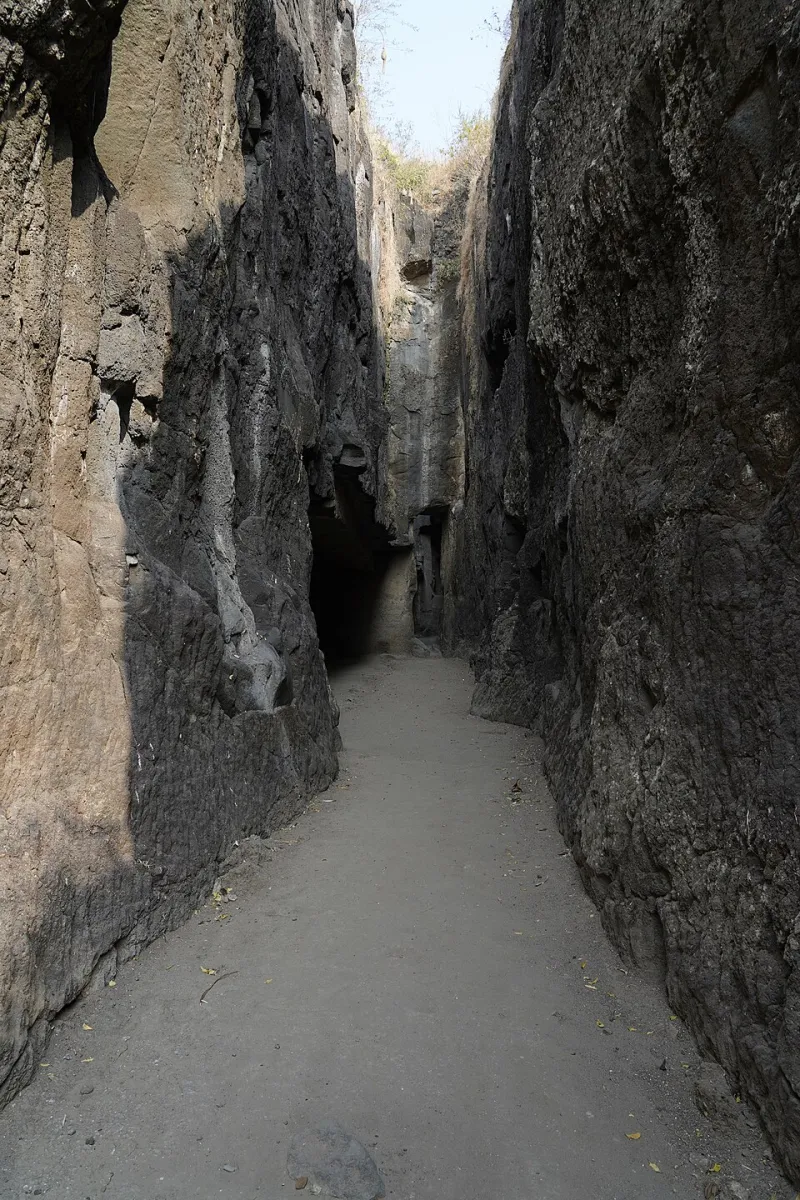
Photo: Amitabha Gupta, CC BY 4.0, via Wikimedia Commons
Every Wirral house with a gap down the side has one. A strip of concrete, a couple of wheelie bins, a bike under a tarp, a drain you try not to think about. It is the part of the garden nobody photographs. And yet, in a small plot, it might be the most useful square footage you own.
A side passage is not really a garden. It is a working space, a threshold, a route, a place where the house meets the boundary and the weather gets funnelled through. Treat it as a corridor and it will behave like one: muddy, cluttered and slightly depressing. Treat it as an outdoor room with a job to do, and it starts paying you back.
Start with the route, not the plants
Before you choose a single fern, decide how people actually move from the front garden to the back. Is this the everyday route, or only the bin route? Do you need to wheel a bike through, carry shopping, push a barrow? If the answer is yes, the path needs to be generous enough to do that without scraping knuckles on the wall.
In most Wirral side strips the available width is tight, so every centimetre matters. A clear walking line of around 900mm is comfortable for most people; less than that and the passage becomes a squeeze. Keep the route straight if you can. A gentle curve looks lovely on paper but in a narrow strip it usually just eats space and makes wheelie bins harder to manoeuvre.
Think about the threshold at each end, too. A wobbly paving slab at the front gate and a step down at the back door are the two places where a working passage most often fails. Sort those first. Everything else is decoration on top of a route that has to function in the rain, in the dark, and with your hands full.
The surface has to cope with winter
This is the part people underestimate. A side passage gets less sun, less wind and more runoff than the rest of the garden. In a Wirral winter it can stay damp for days. Grass will turn to mud. Loose gravel will migrate. Cheap decking will become a skating rink.
A permeable surface is usually the sensible choice: resin-bound gravel, permeable block paving, or a well-laid gravel path with a stabilising grid. These let water through rather than sending it straight to the drain, which matters if your passage already has a history of puddles. Brick pavers set in a herringbone pattern can look smart and cope with a slight fall, but they need proper edging to stop them spreading.
If the passage slopes towards the house, check the drainage before you do anything else. A linear channel across the doorway, a properly positioned gully, or a small French drain may be needed. This is not glamorous work, but it is the difference between a passage you can use in November and one you avoid until spring.
Also be honest about algae. Shaded, damp paving grows a green film in this part of the world. A slight fall, good ventilation and an annual clean will do more than any miracle product. Choose a surface with a bit of texture underfoot rather than a polished finish that looks great in a brochure and treacherous in the wet.
Storage should have a job description
A side passage is often the default home for everything with no other home. Bins, bikes, boots, tools, bags of compost, the odd bucket. The trick is to give each of those things a designated place rather than letting them colonise the path.
A slim bin store that opens from the front keeps wheelie bins out of sight without blocking the route. A wall-mounted bike rack lifts a bicycle off the ground and frees up walking space. A tall, narrow cupboard for tools and boots can turn dead wall space into useful storage. If you have room for a bench, choose one with a lift-up seat so it earns its footprint twice.
Keep storage to one side if possible, leaving the other side clear. That sounds obvious, but in a narrow strip it is the difference between a passage that feels like a route and one that feels like a cupboard you have to walk through.
Planting for a place that rarely gets sun
The side return is usually a shade garden, whether you like it or not. Morning sun may reach one end; the rest may only get reflected light. That is not a limitation to fight. It is a condition to design for.
Ferns are the obvious starting point, and for good reason. Dryopteris, Polystichum and Asplenium will cope with shade and reasonable moisture. Hostas add bold leaves, though you will need to accept some slug damage unless you are vigilant. Sarcococca is a good choice near a doorway, giving glossy evergreen leaves and winter scent. Hellebores will flower in the gloom at the end of winter, and epimedium makes a quiet, useful ground cover under the eaves.
If you want height, choose it carefully. A large shrub will crowd a narrow passage and block the light that does arrive. A slender bamboo such as Fargesia can work as a screen, but keep it away from the walking line and be realistic about watering in dry spells. Climbers on wall-mounted wires can soften the boundary without stealing floor space: a shade-tolerant ivy, a climbing hydrangea, or a jasmine in a sunnier spot.
Use pots where the ground is impossible. A few containers lifted off the paving on feet will add greenery without making the surface wetter. But do not line the entire route with pots, or the passage becomes an obstacle course.
Wind is the other client
A side strip between a house and a wall is a natural wind tunnel. Wirral's westerlies find it and accelerate through it. That affects people, plants and anything lightweight you leave out.
Evergreen structure helps. A clipped hedge or a line of shade-tolerant shrubs will filter wind rather than stop it dead, which is usually better in a narrow space. Avoid big, brittle-leaved plants that will shred in a gust. Fix down anything that could take off. Choose a bin store with a proper latch, not one that flaps in the night.
If the passage is a real wind tunnel, a small gate or screen at the far end can break the flow without blocking access. Think of it as a baffle rather than a barrier. The aim is to make the space usable, not to seal it off.
Make the far end worth reaching
The best side passages give you a reason to walk through them. That might be a view of the back garden framed by planting, a lit doorway, or simply the feeling that you are moving from one proper space to another rather than squeezing past the bins.
A small wall light or two can transform the passage after dark, especially in winter. A mirror on a shaded wall can bounce a little light around, though it will not perform miracles. A bench at the back, even a narrow one, turns a corridor into a place where you might pause to take your boots off.
Above all, keep the route clear. The passage has to work before it can be beautiful. Once it works, the beauty is mostly a matter of good edges, decent materials and plants that are happy in the shade.
The honest bits
A side return will never be a sun trap. It will get wet, it will grow moss, and it will collect leaves. The gutter above it will need clearing. The drain will need checking. The bins will still need to go out.
But a passage that is well drained, sensibly surfaced, thoughtfully stored and planted for shade is not a compromise. It is a genuinely useful outdoor room, and in a small Wirral garden that is worth more than another patch of lawn you never sit on.