Light Less, See More: A Winter Lighting Plan for Small Wirral Gardens
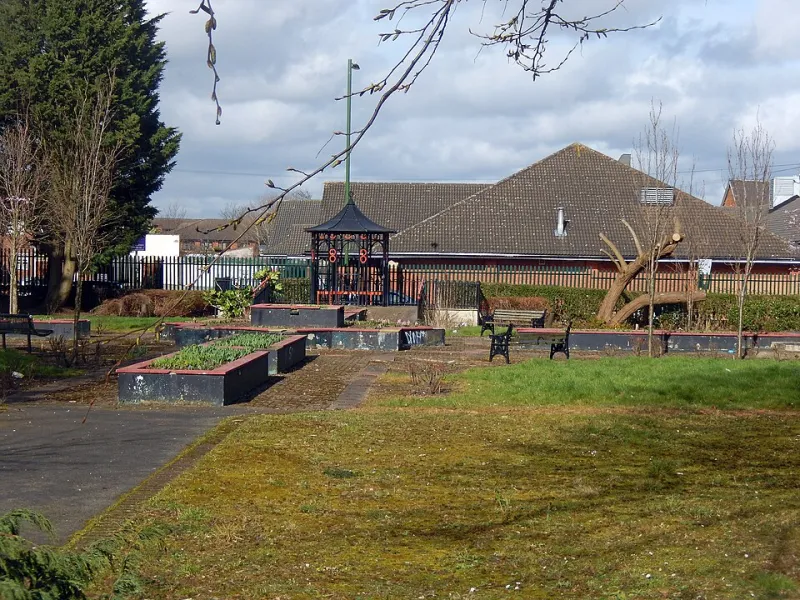
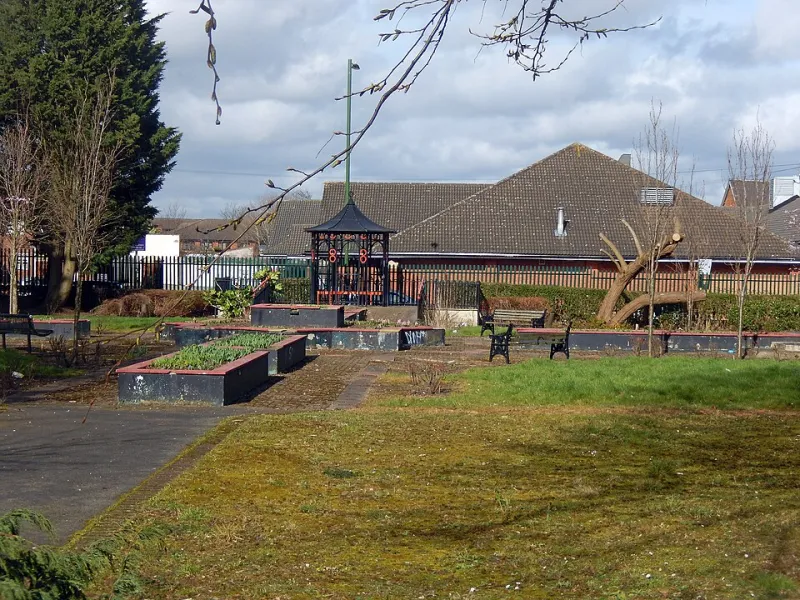
Photo: Stephen McKay , CC BY-SA 2.0, via Wikimedia Commons
There's a particular moment in a Wirral winter, somewhere around ten past four, when the light over the Dee goes from silver to slate and the garden simply stops being a place you can see. On a clear evening you get the last of it catching the tops of the hedges in Heswall; on a wet one it's just gone, quietly, while you were making tea.
The instinct is to fix this with brightness. A floodlight on the back wall, a pair of security lamps over the patio door, and suddenly the garden is visible — and also flat, harsh and thoroughly on show to every neighbour with a view over the fence. Small plots don't need more light. They need better-placed light, and less of it.
Watch the dark arrive before you buy anything
Spend a week just noticing. Where do you actually look when you stand at the kitchen sink at six o'clock? Which route do you walk when you take the bins out? Where does the path step down, and which bit of the border do you keep meaning to plant up but can't see at this time of year?
Write down three things you genuinely need to see after dark. Usually it's the back step, the main path, and the gate or shed latch. Everything else is decoration, and decoration is where lighting schemes go wrong. A small garden with three thoughtful pools of light feels generous. The same plot lit evenly feels like a supermarket forecourt.
Mock it up with a torch and a few cheap lights
Before you spend a penny on fittings, test the idea. A headtorch, a couple of battery puck lights and a fistful of those cheap solar stakes will tell you more in one evening than a catalogue will in an hour. Put them where you think you want them, walk the route at half five, then stand back at the kitchen window and look again.
Then do the awkward thing: go and look from the other side of the fence, ideally with your neighbour's permission. Glare is almost always invisible from the owner's side and blinding from everyone else's. Mark the positions you like with bamboo canes and live with the mock-up for a week or two before committing.
Glare, not darkness, is the thing to design out
A visible bulb at eye level destroys a garden at night. It kills your night vision, flattens everything behind it and annoys the people next door. Every fitting worth buying either hoods the source, recesses it, or aims it down and away.
For paths, keep the light source below knee height so the beam skims the surface rather than hitting you in the face. For walls and evergreens, sit the fitting low and graze upwards rather than blasting across. If you can see the lamp itself from the house, it's in the wrong place.
Warm white, low output, and why 2700K is your friend
Colour temperature matters more than most people expect. Aim for 2700K — a soft, warm white that flatters brick, timber and foliage. The crisp 4000K-plus whites you'll see in DIY sheds are designed for workshops, and in a garden they read as cold and clinical, especially against wet paving.
On output, be restrained. Roughly 100–200 lumens is plenty for a path light, and 150–300 for a small uplight grazing a wall or a holly. Dimmable is worth paying for. The goal is a garden that feels lit rather than illuminated: enough to see your footing and your structure, not enough to cancel out the sky.
Fittings that can take a Wirral winter
Salt air, driving rain and a fortnight of frost will find out any weak point. Look for IP65 or IP66 rated fittings, 316 marine-grade stainless or powder-coated aluminium where the wind carries spray, and solid brass if the budget stretches. Silicone gaskets and proper drainage holes matter more than the finish.
On the cable side, keep it simple and robust. Armoured cable if you're burying anything under a path or lawn, sized for the run so you don't lose voltage at the far end. Take ducting under hard surfaces while you're already lifting them. Keep every joint above ground in a glanded, weatherproof box — buried connectors are where water gets in — and run the whole thing from an RCD-protected outdoor socket or a sealed transformer box. Route cable along bed edges rather than across open ground, and leave a service loop at each fitting so you can lift it out for cleaning.
Timer, sensor, curfew
A plug-in astronomical timer or a smart plug set to dusk-and-dawn will switch everything on without you thinking about it, and off again at a sensible hour. Ten thirty is a decent curfew. After that, the only light in the garden should be the one you switch on yourself.
Motion sensors have their place — the bin store path, the side gate — but keep them off the main scheme. A garden that leaps into life every time a cat walks past is not a relaxing one. A short curfew also does real good for the bats and moths that use Wirral gardens, and keeps the street darker for everyone.
A scheme that suits a small plot
For a typical terraced or semi back garden in Birkenhead, Wallasey or Hoylake, this is a reasonable starting point: two hooded path lights down the main route at 2700K and around 150 lumens; one small uplight grazing a wall, a fence panel or an evergreen shrub; a dimmed warm-white string under a pergola or along a fence top if you have one; and a single battery lantern on the table for the evenings you're actually sitting out. The whole lot can run under fifteen watts, which matters when it's on for five hours a night from November to February.
The five-minute ritual
Once a month through winter, wipe the lenses, check the gaskets, test the RCD and swap any batteries. Salt film dulls output faster than you'd think, and a fogged lens turns a warm glow into a murky smudge.
Do that, and the garden stays usable right through the dark months — a place you can step into at half five, see your footing and enjoy the shape of things. The best-lit small gardens round here are the ones where, if you glance up, you can still make out the stars over the estuary.