Kerb, Path, Pause: Designing the Front Garden as a Proper Room
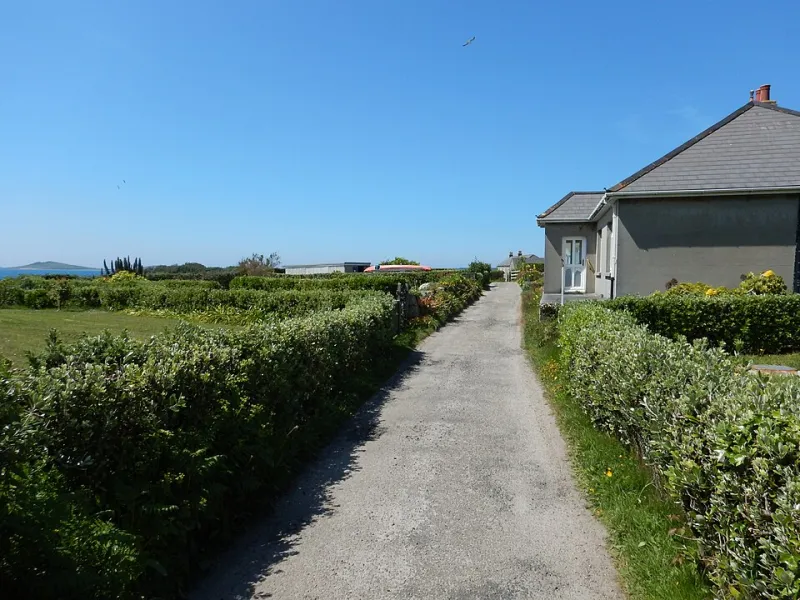
Photo: James Emmans , CC BY-SA 2.0, via Wikimedia Commons
The strip that gets ignored
Walk down almost any Wirral street and you can spot the front gardens that have given up. A square of concrete, a wheelie bin, a path that stops at the door. Parking pressure is real, and nobody is pretending a narrow plot in Birkenhead or Wallasey has room for a meadow and a seating area. But treating the front garden as leftover space is a design choice, and not a very good one. It is the first room visitors see. It is the room you walk through every day. It deserves a plan.
Design from the pavement in
Back gardens are private, so they can be forgiving. Front gardens are public-facing, and that changes the brief. Stand on the pavement and look at your house as a passer-by would. What is the first thing you notice? Is the path clear? Does the bin dominate? Is there anywhere for the eye to rest? Kerb appeal is not about impressing estate agents. It is about making the journey from street to door feel considered.
A narrow front plot starts to feel intentional when the eye has somewhere to land. That might be a small tree with good autumn colour, a clipped evergreen in a pot, a bench, or a repeated edge. What it rarely needs is ten unrelated ornaments. Repetition is the cheap trick that works: the same paving, the same gravel, the same hedge, used again and again.
Zone it like a room
Think in three zones. The threshold is the strip by the door: a place for keys, boots, a light, maybe a small canopy or porch shelter. The path is the route: keep it generous enough to walk with shopping bags, and do not let planting pinch it. The buffer is the band between path and pavement: low planting, a low wall, a hedge, or a gravel strip that softens the boundary.
If you need parking, make that a zone too. A defined bay with a permeable surface and a planted edge looks far better than a car park that happens to have a house attached. The car will still dominate on bin day, but it will not dictate the whole plot.
Privacy without the fortress
Solid fences and tall hedges at the front can make a garden feel shut off, dark and unwelcoming. They also catch the wind. In a coastal borough like Wirral, a solid barrier can create turbulence on the sheltered side rather than solving it. A slatted screen, a low hedge or a see-through guard rail filters wind and keeps a view. Waist-height planting gives privacy from the pavement without blocking light to the front windows.
Security matters too. Keep sightlines to the door. Avoid dense planting right against the entrance. A clear path and a visible front door are better than a mysterious tunnel.
Planting that earns its keep
Front gardens on Wirral streets face wind, salt, rain and, in some cases, heavy soil. Choose plants that can take a bit of weather. Rosemary and lavender work in free-draining spots; euonymus, hebe and hardy geraniums are reliable; ferns and sedges cope with damp shade. Grasses add movement without fuss. If the soil is heavy clay, plant in raised beds or choose moisture-tolerant shrubs rather than fighting the ground.
Low maintenance does not mean no maintenance. A monthly tidy, a cut-back in spring and a mulch in autumn will keep the plot looking deliberate. Gravel, bark or a living mulch of low plants will suppress weeds and save time.
The test
Stand at your front door and look out. Can you see something green? Does the path say come in? Does the parking have an edge? Does the planting soften the kerb? If the answer is yes, the front garden has stopped being leftover space and started being a room. That is the whole point.