The Garden After Work: Making a Small Wirral Plot Worth Stepping Into at 6pm

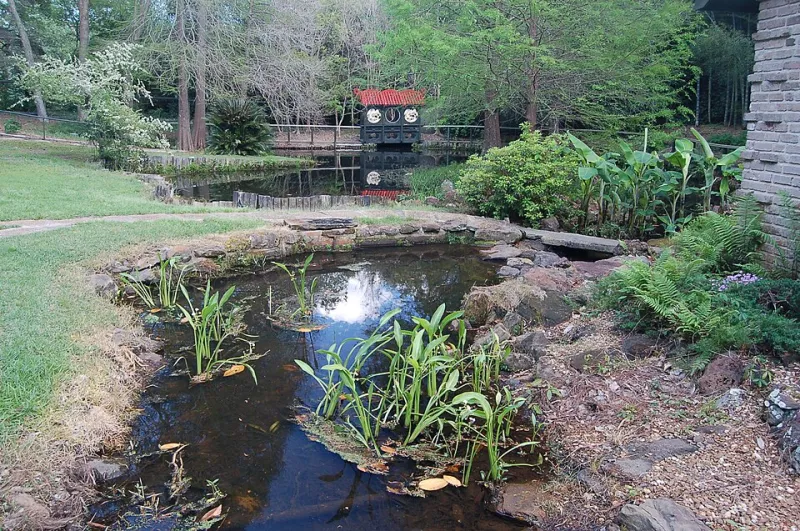
Photo: Tuxyso, CC BY-SA 3.0, via Wikimedia Commons
At six o'clock on a November evening in Wirral, the garden is already dark. The temptation is to close the curtains and forget it until spring. But the evening garden isn't only a summer thing. With a little structure, shelter and light, a small plot can become the best room in the house for the hour after work — even when the weather is doing its usual thing.
The Hour That Changes the Garden
Evening changes what a garden is for. In daylight it's a list of jobs. At dusk it's a place to sit, breathe and stop. The light softens edges, scent carries further and the garden becomes more enveloping. The trick is to design for that hour deliberately, rather than hoping it happens.
Start with the route from the back door. If the first few steps are dark, slippery or cluttered, you won't go out. A clear, firm path and a light that comes on without a phone torch is the foundation of everything else.
Shelter First, Style Second
In Wirral, wind is the party pooper. A beautiful chair in an exposed corner will go unused if the sea breeze finds your neck. Before you buy furniture, find the sheltered spot. That might be a corner against a fence, a recess beside a shed or a screen of planting that filters rather than blocks.
A small pergola, an arbour or even a stout fence panel can create a pocket of calm. Choose one that suits the house and the plot, not the latest trend. In a compact garden, a corner arbour with a solid back and a small roof feels like a room within a room. Add a blanket box and you've got a reason to sit out in October.
Plant for Dusk, Not Just Daylight
White and pale flowers glow at dusk. So do silver leaves, which catch the last light and look good in rain. In a small Wirral garden, a few well-placed pale plants near the seating area will do more for the evening than a whole border of bright colours that disappear at 5pm.
Good choices include white Japanese anemones, pale hellebores, silver-leaved lavender, Euphorbia characias and white cosmos for later in the year. Don't forget evergreen structure: it gives the evening garden a frame when everything else has gone to bed. A small tree or large shrub also casts shadows, which is half the atmosphere.
Scent as a Design Material
Scent is the most underused design tool in small gardens. At dusk, when the air cools and the wind drops, fragrance hangs around. Plant it where you'll brush past it: by the step, beside the bench, along the path. Night-scented stock, tobacco plant, honeysuckle, jasmine and daphne are all worth their space. Even a pot of mint by the door gives you something to crush between your fingers as you go out with a mug of tea.
Scent doesn't need a big border. In a small plot, it needs to be close to your nose. That's the whole point.
Light Less, See More
Garden lighting is often overdone. You don't need to illuminate the whole plot. You need a few low, warm pools of light: a step light, a small uplight in a shrub, a string of warm-white bulbs under a pergola or a solar lantern on the table. The aim is to make the garden feel safe and inviting, not like a runway.
Keep lights low and shielded. Too much glare kills the dusk mood and annoys neighbours. Battery and solar options have improved massively, and warm-white LEDs use very little power. Put them on a timer or a smart plug so the garden is already glowing when you get home.
Screens and the Shape of an Evening
Screens do two jobs at once: they block the wind and they frame the view. In a small garden, a screen can turn a narrow strip into a series of smaller rooms. It doesn't have to be a fence. A row of tall grasses, a living willow screen or a simple slatted panel can work.
Keep the shape simple. An evening garden works best when the eye has somewhere to rest: a bench, a pot, a lit shrub. Too many features and it feels busy; too few and it feels bleak. A single strong structure — a small tree, an arbour, a water bowl — gives the space a centre.
Making It Work in November
The evening garden has to survive real weather. That means a seat that dries quickly, a surface that doesn't turn into a bog and a light you can switch on from indoors. It also means accepting that some evenings you'll just look at it from the kitchen window. That's fine. A garden designed for evening is still working when you're inside: it gives you something to look at, a sense of shelter and a promise of spring.
Add a hardy evergreen or two, a warm-toned pot and a lantern that stays out all year. Then, when a dry evening arrives in February, you've got somewhere to go.
A Small Evening Garden Checklist
- A clear, safe route from the door, with a light that comes on easily.
- A seat in the most sheltered corner, not the sunniest spot you never use.
- Pale flowers and silver foliage near the seating area.
- Scent close to the nose: by the step, path or bench.
- Two or three low, warm lights rather than a floodlit border.
- A screen or planting that filters wind without making the garden feel closed.
- One strong focal point that looks good in the dark.
The 6pm garden isn't about pretending it's summer. It's about making the evening hour feel like somewhere to be — even in Wirral, even in November.